Soil Stabilization Methods
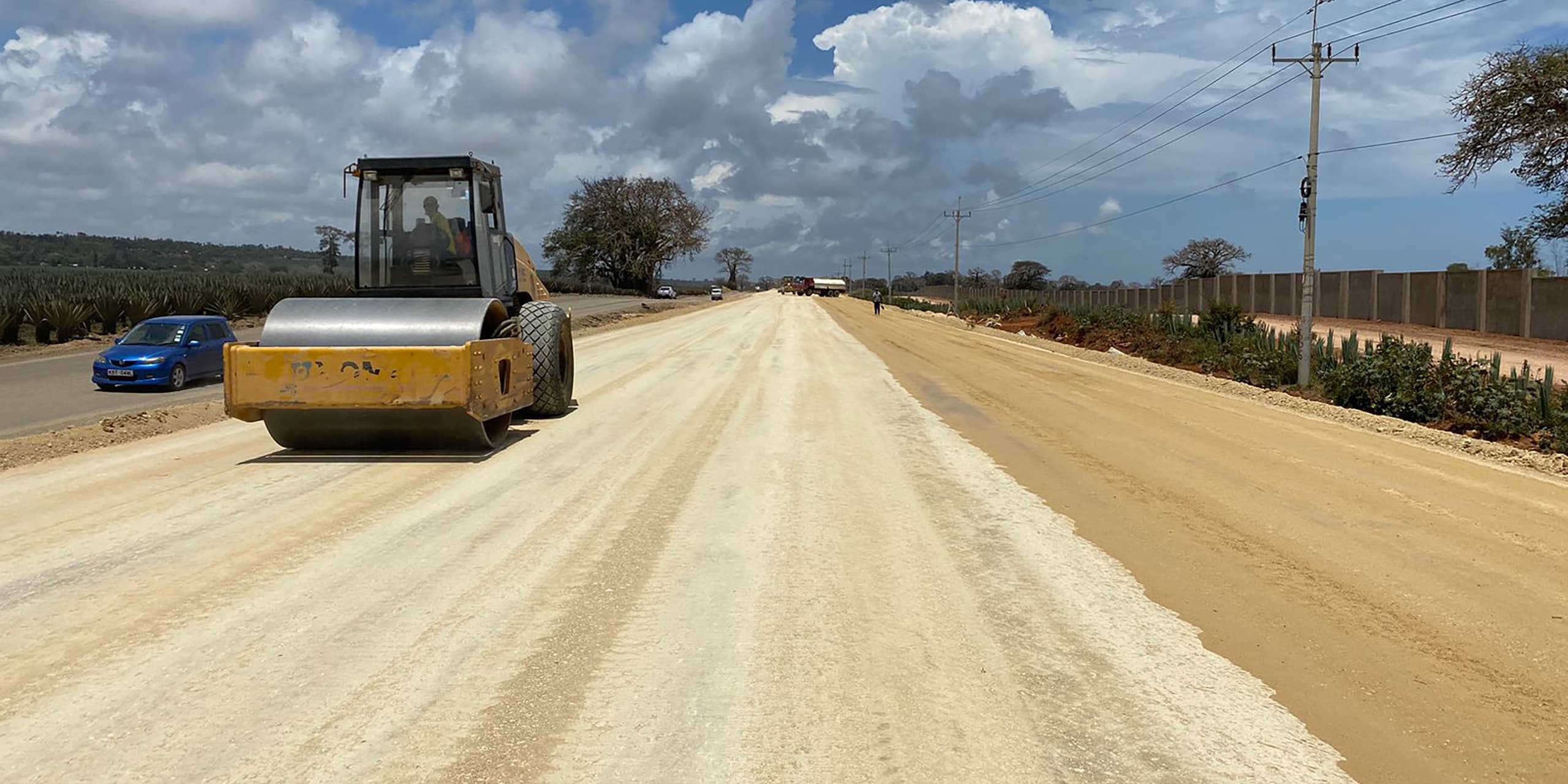
Soil is one of the most widely used material in the construction industry, owing to its plentiful nature. However, most of the time, soil in its natural state may not have the required engineering properties required for the construction of sound elements. For this reason, engineers have come up with ingenious ways of enhancing the engineering properties of soils to ensure better load-bearing capacity, reduced settlement, and increased durability.
There are several methods of soil stabilization, each with its own benefits and applications, catering to different soil types and construction needs.
Mechanical Soil Stabilization
Mechanical soil stabilization is a physical process that involves altering the physical nature of native soil particles by either induced vibration or compaction or by incorporating other physical properties such as barriers and nailing.
The most common type of mechanical stabilization involves soil compaction using compaction equipment like rollers or compactors. Through this process, the soil is densely packed to increase its load-bearing capacity. The benefits include increased soil density, reduced settlement, and improved stability, ideal for loose or granular soils.
Mechanical stabilization methods of soils offer quick stabilization and are effective in treating a wide range of soil types. However, they might not be as effective in improving long-term soil properties compared to chemical or bituminous methods. In cases where mechanical stabilization is not sufficient, it is often combined with other stabilization methods, such as chemical stabilization or the introduction of polymeric materials into the soil.
Cellular Confinement Systems
Apart from the compaction of soil, the introduction of three-dimensional, honeycomb-like structures made of interconnected strips or panels of high-density polyethylene (HDPE) or other polymeric materials, also known as geocells or geocrates, can be used to enhance soil’s engineering properties. These geocells are utilized in soil stabilization and erosion control for various construction, civil engineering, and environmental applications. The use of cellular confinement systems is also another form of mechanical stabilization of soils. Normally the use of cellular confinement systems is combined with other soil stabilization methods such as compaction.
Cellular Confinement Systems work by confining the soil within its cellular structure, effectively creating a stable platform for load support. The cells prevent lateral movement of the infill material, increasing load-bearing capacity and reducing soil erosion.
Furthermore, geocells can be stacked and filled to create retaining walls or embankments. The interconnected cells offer structural support, preventing soil or aggregate from shifting or slumping. These structures provide stability and reinforcement against gravity and lateral forces.
Geocells can also be used for slope stabilization. When filled with appropriate material, geocells can be used to stabilize slopes and control erosion. They act as a barrier against soil erosion by confining topsoil or vegetation, preventing it from being washed away by rainfall or water runoff.
In road construction, geocells are employed as a base reinforcement for roads, parking lots, and other paved surfaces. When filled with aggregate, they act as a stable foundation by distributing loads and reducing vertical stress on the subgrade, improving the pavement’s performance and longevity. Geogrids are also widely used in the construction of reinforced earth walls, otherwise referred to as Mechanically Stabilized Earth (MSE) walls.
Geocells are adaptable and suitable for a wide range of soil types, providing an efficient and sustainable solution for soil stabilization in construction and engineering projects.

Chemical Stabilization
Chemical stabilization involves the introduction of stabilizing agents into the soil to enhance its engineering properties. Stabilizing agents are hydraulic (primary binders) or non-hydraulic (secondary binders) materials that when in contact with water or in the presence of pozzolanic minerals react with water to form cementitious composite materials. The commonly used binders are:
- cement,
- lime,
- fly ash.
The choice of stabilizing agent is dependent on several factors, one of the major ones being the type of soil being stabilized. Lime stabilization is often preferred for clayey soils due to its ability to reduce the plasticity of clay. The introduction of lime into clay leads to reduced shrinkage and swelling which is normally witnessed in neat clayey soils. In summary, lime stabilization is only applicable in the following two contexts:
- Where the natural soils are excessively clayey and no better material is economically available,
- Where the natural soils are excessively wet and cannot be dried out because of adverse weather conditions.
Cement stabilization is widely used for all other soils owing to its superior performance and wide availability.
In road infrastructure projects, cement-improved gravel pavement layers are very common. These pavement layers are constructed through the introduction of a small quantity of cement into the neat gravel and further compaction of the material to densify and increase its stability. According to the Kenya Road Design Manual Part III – Materials and Pavement Design, the term stabilization is used for materials that receive between 5% to 8% of ordinary Portland cement. Stabilization leads to the material being rigid and alters the material properties significantly. In this case, the California Bearing Ratio (CBR) of the treated material is meaningless and engineers thus adopt the Unconfined Compressive Strength (UCS) to determine the strength of the treated material. For lower proportions of cement whereby the strength of the treated material can be determined using the California Bearing Ratio, the material is said to be cement-improved.
The success of each stabilization choice is dependent on many factors and therefore it’s crucial to consider site-specific conditions and conduct thorough soil analysis to determine the appropriate stabilizer content and application method for achieving optimal stabilization. Normally, this is done through a process referred to as ‘mix design’, whereby engineers introduce varying quantities of stabilizer into a soil sample to determine the most appropriate stabilization quantity that yields the required results. This process is usually done in a lab setup.
Bituminous Stabilization
Bitumen is applied as an emulsion to the soil, forming a flexible and water-resistant layer. This method is effective in enhancing soil strength and preventing water infiltration, suitable for road construction and as a base for flexible pavements.
Electrokinetic Stabilization
This method uses electrical current to control the movement of ions in the soil, which alters the soil’s mechanical properties. It’s suitable for fine-grained soils, providing improvements in strength and reducing settlement.
Biological Soil Stabilization
Plant roots and certain biopolymers can stabilize the soil. Plant roots help bind the soil particles, preventing erosion and improving stability. Bio-polymers can be used to improve soil structure and stability in certain conditions.
Biological soil stabilization is widely used in slope stabilization for fill and cut areas, such as the planting of grass on such slopes.
Conclusion
In conclusion, soil stabilization methods play a pivotal role in ensuring the longevity and stability of construction projects. The choice of a specific technique depends on factors such as soil type, project requirements, and environmental considerations. A careful analysis of these factors allows engineers to implement the most suitable soil stabilization method, providing a solid foundation for infrastructure development.